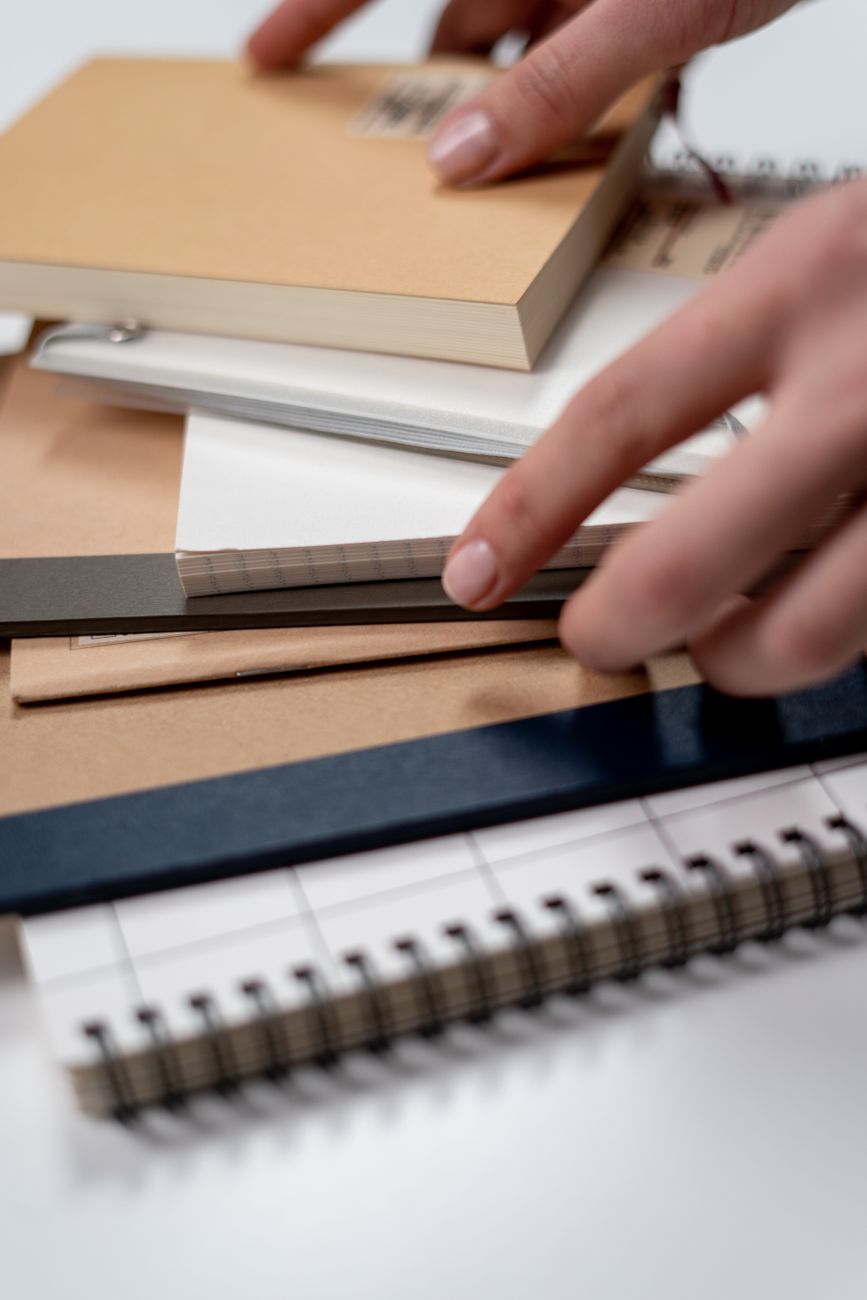
Ask a writer what’s in their bag and you’ll find at least one notebook they’re not currently using, two pens they won’t lend you, and probably a third pen they forgot about. It’s a cliché because it’s true. Writers and stationery have a relationship that goes beyond utility, and if you’ve ever felt guilty about buying another journal when you have four at home, this is for you.
It’s Not Procrastination. It’s Preparation.
There’s a persistent myth that caring about your tools is a form of avoidance. That real writers just write, on anything, anywhere, with whatever’s nearby.
Some do. But for most writers, the physical act of writing is inseparable from the environment it happens in. Choosing a notebook isn’t delaying the work. It’s deciding where the work lives. That matters. A notebook you love is one you’ll actually open.
Handwriting Slows You Down (In a Good Way)
Typing is fast. Too fast, sometimes. Thoughts arrive and leave before you’ve properly looked at them. Writing by hand forces a different pace. You catch things you’d otherwise skip past. You notice when a sentence doesn’t feel right because your hand has to commit to it, word by word.
A lot of writers keep handwriting for first drafts or brainstorming specifically because of this. The friction is the point.
A Notebook Holds What a Screen Doesn’t
Digital notes are searchable, backed up, accessible everywhere. They’re also forgettable. Scroll through your phone notes and you’ll find ideas you have no memory of writing.
A physical notebook has weight and texture and a place on your shelf. You pick it up and things come back. You flip to a random page and find something you’d given up on. There’s a spatial quality to paper that screens just don’t replicate. Writers know this intuitively even if they can’t always explain it.
The Ritual Is Part of the Work
Sit down. Open the notebook. Uncap the pen. Write the date.
For a lot of writers this small sequence is a signal. It tells the brain something is about to happen. It’s not superstition, it’s conditioning. The ritual creates the state. And the nicer the objects involved, the more reliably the ritual works.
This is why writers buy good pens. Not because a good pen writes better sentences, but because it makes sitting down feel worth doing.
You’re Allowed to Have Preferences
There’s sometimes a guilt around caring about this stuff. Like you’re being precious or self-indulgent. Like the serious writers are out there suffering nobly with a chewed biro and a stack of printer paper.
But caring about your working environment isn’t vanity. Architects care about their drawing tools. Chefs care about their knives. Musicians are particular about their instruments. Writers are allowed to be particular about paper and ink.
The work is what matters, yes. But you’re the one who has to show up and do it, day after day. Make the conditions as good as you can.
You’ll Never Have Enough Notebooks and That’s Fine
There is no correct number of notebooks to own. The one for ideas, the one for the current project, the one that’s too nice to use, the one from three years ago with six good pages and then nothing. They’re all valid. They’re all part of it.
Keep buying them. Keep filling them. Keep the pen you love in a place you’ll always find it.
The writing happens when it happens. Make sure you’re ready when it does.
Leave a Reply